

- We offer free customization options and factory prices;
- We are a semi-trailer factory with 40 years of manufacturing experience;
- Contact us now and you will get professional services from engineers with rich customization experience.

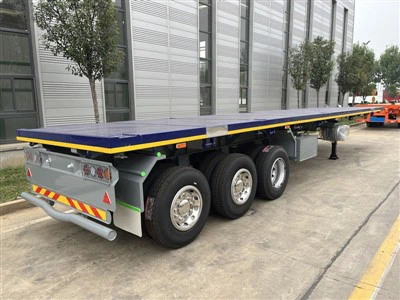


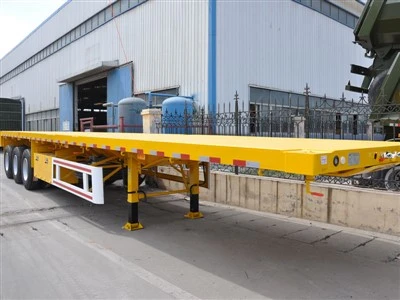
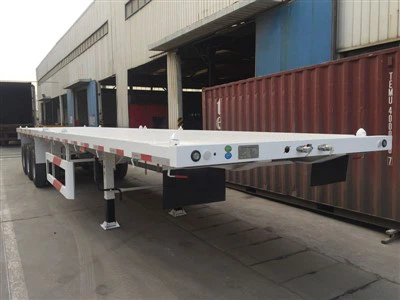


What is Flatbed Semi Trailer?
A flatbed semi-trailer is a type of trailer used in the transportation industry to haul goods on the road. It has a flat and open platform without any sides or roof and is designed to accommodate oversized or bulky items that cannot fit in an enclosed trailer. These trailers can be used to carry large machinery, construction equipment, vehicles, and other large goods. They are usually attached to a tractor truck and are commonly used for long-distance and heavy haul transportation. Flatbed semi-trailers are versatile and can be loaded and unloaded easily from the sides and overhead, making them ideal for shipping a wide range of goods.
Versatility
Flatbed semi trailers are versatile and can be used to carry a wide range of cargo, including heavy equipment, oversized loads, construction materials, and even vehicles.
Easy loading and unloading
Because there are no sides or roofs, loading and unloading cargo is much easier and quicker with a flatbed semi trailer. You can simply drive the load onto the trailer, secure it, and transport it to its destination.
Easy maintenance
Flatbed semi trailers are easy to maintain because they are simple in design and have fewer moving parts than enclosed trailers. This translates to less downtime, lower maintenance costs, and a longer lifespan.
Improved fuel efficiency
Flatbed semi trailers are generally lighter than enclosed trailers, which means they are more fuel-efficient and can transport more cargo at once.
Cost-effective
Flatbed semi trailers are cost-effective because they can be used for a variety of different cargo types, eliminating the need for multiple types of trailers. Additionally, they are easy to repair and maintain, which helps save on costs.
Easy to maneuver
Flatbed trailers are easier to maneuver in tight spaces and narrow roads compared to other types of trailers. They have a shorter turning radius and are more maneuverable, which is particularly useful for urban or construction site transportation.
Increased safety
Flatbed trailers have open sides and no roof, providing a clear view of the cargo and reducing the chances of cargo theft or damage.
Cost-effective
Flatbed trailers are less expensive than other types of trailers. They are also fuel-efficient, which means they save money on fuel costs.
Environmentally friendly
Flatbed trailers help reduce carbon emissions because they reduce the frequency of trips needed to transport goods. This results in less fuel consumption and a smaller carbon footprint.
Types of Flatbed Semi Trailer
Standard flatbed trailer
A standard flatbed trailer has a flat and open deck with no sides, a roof or a door. They are generally between 48 and 53 feet long and are designed to carry loads of up to 48,000 pounds. These trailers have a fixed rear axle with two or three axles and require a tractor unit to pull them.
Flatbed container trailer
By installing twist locks on open decks, it is possible to transport 20-foot and 40-foot containers, as well as irregular cargo, machinery and equipment, etc.
Flatbed cargo trailer
Adding removable posts to an open deck allows for the transport of easily rolling goods such as logs and pipes. Removing the posts allows for the transport of machinery or other cargo. Additional securing points are provided below the flatbed trailer deck for extra protection of the cargo.
Extendable flatbed trailer
An extendable flatbed trailer is a flatbed trailer that can be extended from its original length to accommodate longer loads. These trailers are ideal for hauling longer objects that cannot fit on a standard-sized flatbed. They can be extended between 48 and 80 feet long, depending on the specific model.

The material used for constructing flatbed semi trailers include high-strength steel, aluminum alloy, and composite materials. High-strength steel is preferred due to its durability, strength, and ability to withstand heavy loads without bending or breaking. Aluminum alloy is a lightweight material that offers corrosion resistance and increases fuel efficiency. Composite materials like, fiberglass or carbon fiber, are also used in some cases to provide a balance of strength and lightness. However, these materials are more expensive than steel and aluminum and may not be suitable for all applications.
Application of Flatbed Semi Trailer
Construction industry
Flatbed semi-trailers are extensively used by contractors and construction companies for the transportation of construction equipment such as bulldozers, cranes, and excavators. These vehicles help in the transportation of heavy equipment and machinery in a safe and secure way, without the risk of damage.
Agriculture industry
In the agriculture industry, flatbed semi-trailers are used to transport farm produce such as grain, hay, and livestock. The open platform of these trailers makes it easy to load and unload farm produce, reducing the risk of damage and saving time.
Manufacturing industry
Flatbed semi-trailers are used by manufacturing industries for the transportation of raw materials and finished goods. These trailers provide a safe and secure method of transportation for fragile and sensitive goods such as glass, steel, and chemicals.
Logistics and transportation industry
In the logistics and transportation industry, flatbed semi-trailers are used to transport goods and products over long distances. These trailers are ideal for transporting large and bulky items such as machinery, vehicles, and construction materials.
The frame
The process of building a flatbed semi trailer starts with a frame. The frame is the basic structure of the trailer onto which other parts are attached. The thickness and strength of the frame depend on the weight and size of the load it will be carrying.
Axles
The next step is to install axles. The number of axles that a flatbed semi trailer has depends on its capacity. The axles provide support and balance to the trailer.
Suspension
The trailer's suspension system is the next part to be installed. This system ensures a smooth ride for the cargo and the driver. The suspension system includes leaf springs, airbag suspension, and shocks.
Brakes
Semi trailers are equipped with air brakes. Air brakes are heavier duty than standard hydraulic brakes and provide better stopping power for large and heavy loads.
Landing gear
Landing gear is a set of supports that help to keep the trailer level when it is detached from the truck. These supports are operated by a crank handle and can be adjusted to prevent the trailer from tipping over.

Decking
The deck of the trailer is the flat surface on which the cargo is secured. The deck can be made of different materials such as wood, steel, or aluminum. Wood is the most commonly used material for decking.
Tie-downs
Tie-downs are used to secure the load on the deck. The tie-downs can be chains, straps, or hooks. The number of tie-downs required depends on the weight and size of the load.
Lights and wiring
A flatbed semi trailer must be equipped with lights and wiring that meet federal DOT regulations. The lights include brake lights, turn signals, and rear lights. A breakaway system is also required which automatically applies the brakes if the trailer becomes separated from the truck.
Painting and finishing
The final step is painting and finishing. The trailer is painted with high-quality paint to protect it from rust and corrosion. Graphics and branding can also be added to the trailer.
Frame
The frame of a flatbed semi trailer is the most important component. It is responsible for providing the necessary support for the deck and the load. The frame is usually made from high-quality steel and is designed to be strong and durable.
Deck
The deck of a flatbed semi trailer is the flat, open platform on which the cargo is loaded. The deck is usually made from steel, aluminum, or wood and is designed to withstand heavy loads and harsh environmental conditions.
Side rails
Flatbed trailers may or may not have side rails. They are metal or aluminum beams that run along the sides of the trailer deck, providing additional support for the load and helping to prevent it from shifting during transport.
Stake pockets
Stake pockets are holes that are drilled into the side rails of a flatbed trailer. They are used to hold removable stakes or sideboards that can be added to the trailer to create a higher edge around the cargo.
Ramps
Some flatbed trailers have ramps that can be used to load and unload heavy equipment and machinery. The ramps are typically made from steel and can be folded down or removed when not in use.
Suspension
The suspension system of a flatbed semi trailer is responsible for providing a smooth ride for the cargo. The suspension system includes axles, wheels, brakes, and springs. The number of axles depends on the weight of the cargo being transported.
Landing gear
The landing gear is used to support the front of the trailer when it is not attached to a tractor. The landing gear includes two legs that can be lowered to support the front of the trailer.
Lighting system
The lighting system of a flatbed semi trailer includes headlights, taillights, and turn signals. The trailer lights are connected to the tractor to ensure they are working properly during transport.
Tie-downs
Tie-downs are used to secure the cargo to the deck of the flatbed trailer. These are typically metal hooks or chains that are anchored to the trailer and used to hold the cargo in place during transport.
Regular inspections
Regular inspections are crucial to detect any signs of wear and tear, damage or defects. Check for any cracks in the frame, suspension parts, tires, brakes, and other components. Look for signs of rust or corrosion and address any issues immediately.
Lubrication
Keep the trailer well-lubricated, especially at moving parts such as hinges, suspension, and brake components. Use quality lubricants that are recommended by the manufacturer to prevent friction and extend the life of the trailer.
Tire maintenance
Check the tires regularly for proper inflation and wear. Underinflated or overinflated tires can cause uneven wear and affect the stability of the trailer. Rotate the tires regularly to ensure even wear.
Brake system maintenance
Proper brake maintenance is crucial for the safety of the vehicle and those around it. Inspect the brakes regularly for signs of wear and tear. Replace brake pads as needed and check the brake fluid level. Also, keep the brake components free of debris and contaminants to prevent damage.
Electrical system maintenance
The trailer's electrical system plays a crucial role in its operation. Inspect the wiring regularly for any damage or corrosion. Check the lights, brakes, and other electrical components to ensure they are functioning properly.
Cleaning
Regular cleaning of the trailer will prevent the accumulation of dirt and debris that can cause damage. Wash the trailer periodically using a commercial cleaner recommended by the manufacturer.
Company Profile
Since 1980s Brand VEHICLE MASTER was created, Whole Staff Begin to Think of truck trailer transportation, Through Almost 40 Years R&D, production and practice, Finally become famous Manufacturer and supplier of truck trailer. Vehicles Production Base over 40 years of development and accumulation. The leading products including flatbed semi trailer, low bed semi trailer, tanker semi trailer, side wall semi trailer, fence semi trailer, skeleton semi trailer, van semi trailer, dump semi trailer, special semi trailer and trailer parts. Sinotruk Shacman CC brands truck tractor, dump truck other truck series together with all spare parts, such as axles, landing gear, springs, suspension, etc.
Why choose us?
Professional team
Our professional team collaborate and communicate effectively with one another, and are committed to delivering high-quality results. They are capable of handling complex challenges and projects that require their specialized expertise and experience.
Customized services
Our team of experts will work closely with you to understand your needs and will provide solutions that are tailored to meet your expectations.
One-stop solution
We can offer a range of services, from consultation and advice to product design and delivery. It is a convenience for the customers, as they can get all the help they need in one place.
Global shipping
Our products support global shipping and the logistics system is complete, so our customers are all over the world.
Certifications


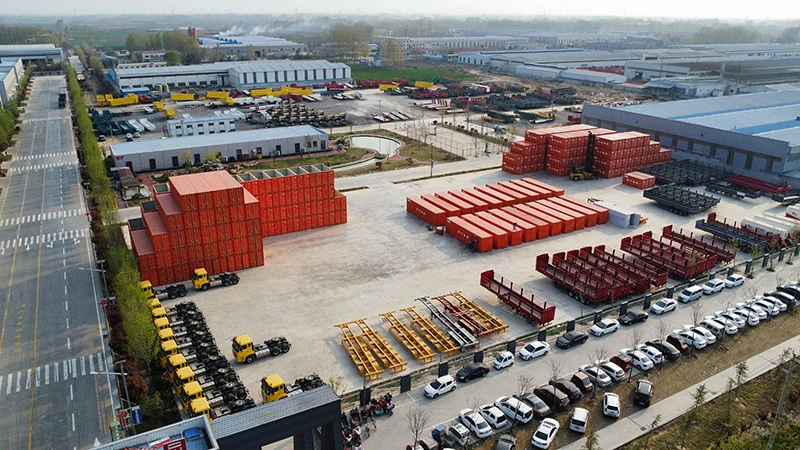
Our Factory
As one of the most professional semi trailer manufacturers, Vehicle Master provides OEM/ODM semi trailer products for customers from all over the world. Every year, we produce thousands of different types of semi trailers and trailer parts. By 2022, we have established close business relationships with thousands of customers from more than 40 countries worldwide. Vehicle Master strives for top notch quality, great value, and excellent customer service.
FAQ
Q: What is a flatbed semi trailer?
Q: What is the maximum weight a flatbed semi trailer can carry?
Q: How long is a flatbed semi trailer?
Q: What is the width of a flatbed semi trailer?
Q: How high can cargo be loaded on a flatbed semi trailer?
Q: What types of cargo can be transported on a flatbed semi trailer?
Q: Do flatbed semi trailers have a ramp for easy loading and unloading?
Q: What is the difference between a flatbed semi trailer and a step deck semi trailer?
Q: What are the dimensions of a flatbed semi trailer?
Q: Do flatbed semi trailers require special permits for oversized loads?
Q: Can flatbed semi trailers be loaded from the side?
Q: How is cargo secured on a flatbed semi trailer?
Q: What should I consider when choosing a flatbed semi trailer?
Q: What are the benefits of using a flatbed semi-trailer?
Q: Do flatbed semi-trailers require special permits?
Q: How is a flatbed semi-trailer different from other types of trailers?
Q: What is the average lifespan of a flatbed semi-trailer?
Q: How is a flatbed semi-trailer maintained?
Q: Can a flatbed semi-trailer transport oversize loads?
Q: Can flatbed semi trailers be customized to meet specific transportation needs?
We're well-known as one of the leading flatbed semi trailer manufacturers in China. Please rest assured to buy high-grade flatbed semi trailer for sale here from our factory. All our products are with high quality and competitive price.
48 Feet Flatbed Trailer, Trailer Flatbed, Heavy Duty Flatbed Trailers