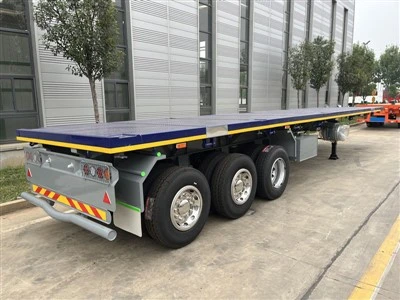
Semi Trailer Types & Legal Dimensions For Middle East & North Africa
Leave a message
If you ask a fleet operator based in Jeddah or Casablanca about their requirements, they will frame their answer around the freight they haul: containers, aggregate, diesel, or a 40-tonne excavator. Yet put that same question to the local traffic authority, and their focus is entirely different. They care about dimensions, per-axle load limits and the number of tyres in contact with the pavement. In the Middle East and North Africa those two answers do not always agree, and the space between them is where money quietly disappears - a trailer that was perfect for the job but cannot be plated, or one that plates cleanly and then overloads every bridge between the port and the site.
So this guide begins with dimensions rather than with cargo. Once the legal envelope is clear, the type of trailer follows almost automatically, because the road has already ruled out half the catalogue.
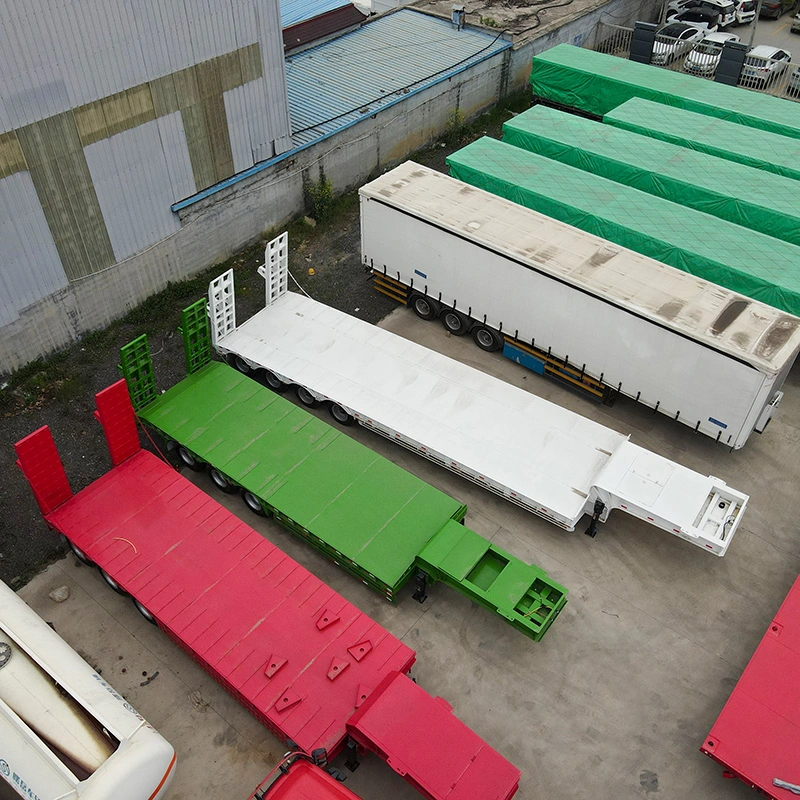
Three Metrics That Determine Trailer Usability
The first is combination length. Across much of the region, articulated combinations are worked to an envelope that runs somewhere between sixteen and eighteen metres overall, but that figure is not a single regional standard - it moves when you cross a border and it changes again on older urban roads and inside port areas. A trailer that meets all legal requirements for desert highways may exceed length limits inside city zones, or be turned away by terminals designed for shorter combinations.
The second is gross combination weight. Permitted gross weights in the Gulf commonly sit in the low-to-mid forty tonne band, while several North African corridors run lower, and the figure is usually quoted for the combination rather than the trailer alone. This single number decides axle count far more often than any careful cargo calculation does: a buyer who picks three axles because three axles is what everyone runs will find the arithmetic unforgiving once a heavy load and a full tank of fuel are added together.
The third factor is axle load, and this is the figure that causes road damage and leads to inspections at weigh stations. It is also the most frequently misunderstood metric, since you cannot simply divide the trailer's total load rating by its axle count. It depends on where the load sits along the deck, how the fifth wheel is positioned, and how much of the weight the tractor is carrying. Two trailers of the same nominal capacity can put very different loads on the same bridge.
Before ordering, the reliable move is to ask the importer or clearing agent which registration category the trailer will be plated under, and to get that in writing. The identification plate is issued based on the officially registered dimensions, not the figures listed in the sales brochure. If inspectors find discrepancies at the port, it becomes a documentation issue that cannot be resolved with any modifications or welding work.
A rough working map looks like this. Every row still needs local confirmation, but the pattern holds widely enough to plan around.
| Type | Main work in the region | Usual axle count | What to watch on dimensions |
|---|---|---|---|
| Flatbed | containers, steel, plant on deck | 2–3 | deck length against 20ft or 40ft, twist lock spacing |
| Skeleton | port and depot container shuttles | 2–3 | locking positions, tare weight |
| Side wall | bagged cement, palletised block | 3 | Wall Height, Legal Width and Height Limits |
| Fence / stake | livestock, timber, mixed bulk | 3–4 | post height, loaded height |
| Tipper | aggregate, sand, spoil | 3–4 | body length against tipping stability |
| Tanker | fuel, water, powder | 3 | volume against permitted payload, baffling |
| Lowbed | excavators, plant, oversize loads | 3–4 plus | deck height, gooseneck, steering axles |
Dry Freight: Our Highest-Volume Application
Container and steel work is the backbone of most regional fleets, and the flatbed semi trailer is what carries it. The buying decision here is rarely about strength - a standard flatbed is built to take a container or a coil without complaint. It is about geometry. The deck has to be long enough for the box you actually move and short enough not to waste legal length you could spend on payload, and the twist locks have to sit at the spacing your containers use rather than at a nominal position that fits nothing. A flatbed built to carry steel coils must be engineered with point loading in mind. Unlike containers, coils concentrate heavy weight onto a compact contact area.
The skeleton semi trailer does the same job in a different setting: port to depot, terminal to yard, short repeated shuttles where the box is loaded and tipped off many times a day. Tare weight carries greater importance here than in most other scenarios, since every kilogram added to the trailer itself reduces the payload the whole vehicle combination can legally transport.That is why a two-axle skeleton makes sense on a pure twenty-foot shuttle route, and why a three-axle forty-foot unit is the usual choice once the same trailer has to run on the open road as well. Buying the bigger unit for a short route is not a safety gain; it is permanent lost payload.
Aggregate, cement and construction supply
The construction economy of the region runs on bulk, and two body styles do most of it. The side wall semi trailer carries bagged cement, palletised block, tiles and mixed general freight, and its working variable is wall height. Taller walls hold more, but they also add height and, on some routes, push the combination past the legal envelope; the right height is the one that matches your usual cargo, not the tallest one available. Flat-opening drop sides are a valuable feature when forklifts load cargo from the side of the trailer instead of over its rear end.
For loose material - sand, gravel, crushed rock, construction spoil - a tipping trailer is the tool, and here the dimension question is about stability rather than length. A long body tipping at full angle puts a large overturning moment on the chassis, and the failure mode is not a slow wear problem but a rolled trailer on uneven ground. Body length matched to the material's flow behaviour, a correctly sized hydraulic cylinder and a flat, firm tipping spot matter more than nominal tonnage on the plate.
Liquid cargo, where volume and payload fight each other
Fuel distribution is one of the region's most consistent trailer markets, and it is also where the most common specification error lives. A fuel tanker semi trailer quoted at forty-five thousand litres sounds like more capacity for the same money, until someone multiplies the volume by the density of diesel. Forty-five cubic metres of diesel weighs approximately 38 tonnes, and that figure does not include the tank, chassis or tractor unit. As a result, even a trailer that seems compliant on paper will exceed the allowable gross weight once fully filled.The right starting point is the permitted payload, and the tank volume is whatever that payload allows - not the largest shell the factory can weld.
Compartment layout is the next decision, and it is driven by how the fuel is delivered rather than by how much it holds. A distributor serving small forecourts wants several compartments with independent discharge so two or three grades can travel together; a bulk hauler running one product to one terminal is better served by fewer, larger compartments and less dead volume. Baffles, bottom loading provisions and the discharge arrangement then follow the delivery pattern.
Powder transport is a separate category altogether. It uses a sealed tank and pneumatic unloading system instead of the liquid tank shell used for liquids. Our factory shipped fifty of those units to Dominica in one batch - a powder tanker trailer export project that is worth looking at if your cargo is cement or fly ash rather than fuel, because the two tank types share a shape and almost nothing else.
Heavy Plant & Oversize Margin
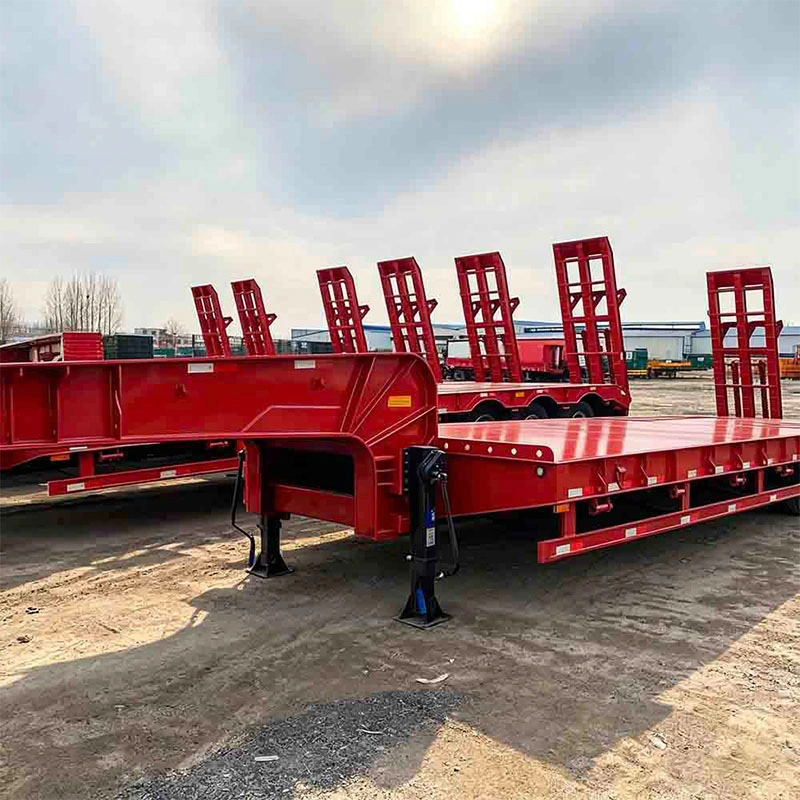
Every regional market has a plant-moving problem: excavators, wheel loaders, crushers and generators that have to travel between sites, and often between a port and a site a long way inland. The lowbed semi trailer handles it, and the dimensions that matter here are deck height and gooseneck geometry rather than overall length. A low deck keeps the loaded combination under bridge and cable clearances; the gooseneck determines how much of the machine's weight sits on the tractor; and the ramp angle decides whether a track machine can climb aboard without a crane.
When choosing a lowbed trailer, buyers frequently misjudge the axle quantity and end up with either insufficient or excess axles. Too few axles lead to excessive individual axle loads that exceed route limits, making every weighbridge stop a hassle. Too many adds tare, tyre cost and a longer turning circle for a load that never needed it. On routes with tight site access, self-steering or forced-steering axles are usually a better spend than extra static axles, because they solve the corner that the extra length makes harder.
Heat, dust, and the last kilometre nobody plans
Two regional conditions change how a trailer behaves after delivery, and neither appears on a dimension drawing. The first is sustained ambient heat. Tyre load ratings and inflation pressures are set for a reference temperature, and a combination running all day at fifty degrees in the shade is working outside that reference; the practical response is to specify tyres and pressures with the heat in mind rather than to discover it through a blowout on a loaded run. Hydraulic systems fitted on tipper and lowbed trailers also tend to operate at higher temperatures. That means oil cooling assemblies and cylinder seals need closer scrutiny than they would for markets with mild climates.
The second is dust, and it changes maintenance intervals rather than design. Air systems, brake adjusters and grease points fill faster on unpaved site roads, and a trailer that is greased on a European schedule will be running dry long before the calendar says so. The same unpaved roads decide ground clearance and deck protection: a low deck that is perfect on tarmac can bottom out on a site track, and a flatbed without edge protection loses its deck plate to a loader bucket within a season.
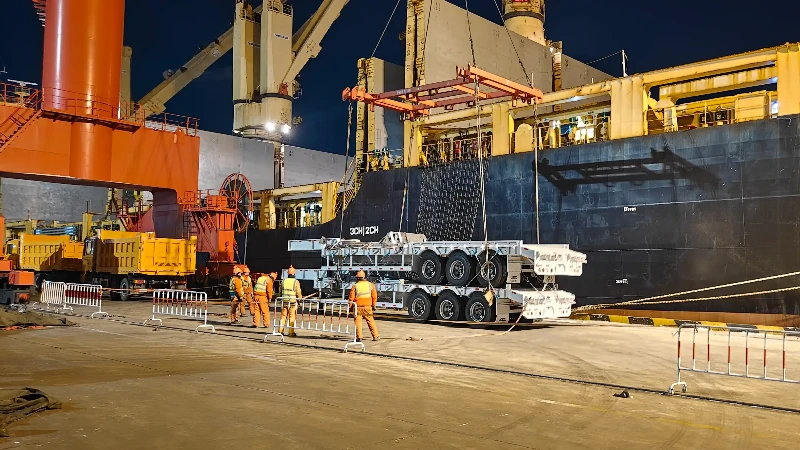
That final stretch of delivery also covers border crossing. Trailers built for this region are often shipped in disassembled form, either as CKD kits inside containers or SKD units loaded on decks. The shipping method you select when placing your order determines how much assembly work will be needed once the cargo arrives.A buyer without a workshop at the port end should say so before the trailer is packed, because the packing plan and the assembly instructions are written at the factory, not at the quay.
What Regulations Do Not Cover
A registration plate confirms that a trailer is legal. It says nothing about whether the specification is sensible. The most common expensive mistake in the region is buying axle count for the worst load ever carried and then paying for it on every other trip, in tare, in fuel, in tyres and in a turning circle that no longer fits the yards the trailer actually works in. The second is specifying for the legal maximum and then never loading to it, which leaves a heavy trailer permanently carrying air.
These less obvious factors matter just as much: whether the tyre size listed on the spec sheet is readily available in your market, if brake and suspension components can be sourced locally or must be imported, and whether your servicing workshop has the right tools for your selected axle model. A trailer is a fifteen-year purchase in a market where a two-week wait for a seal can idle a whole unit, and local parts availability is a specification item, not an afterthought. It is also why we have been building a dealer and service presence in the region, starting with the search for semi trailer dealers in Saudi Arabia that we opened to support exactly this kind of after-sales coverage.
Briefing a supplier so the trailer arrives registrable
A useful enquiry is short and specific. State the route the trailer will run and whether it crosses a border. Give the cargo and its density, not just its name, because a cubic metre of sand and a cubic metre of diesel are nothing alike. Name the registration category or the gross weight the authority will plate, and the port of entry. Include local ambient conditions and the condition of site access roads at the delivery location, and clearly state whether a workshop is on hand to assemble the knocked-down trailer.
These eight points help avoid most specification conflicts before production starts. Share this information with us, and we will recommend the most suitable trailer model, the axle and dimension specification that fits the plate rather than the brochure, and a quotation with the shipping method that matches your assembly capability.