

Discharging To The Side: When A Side Tipper Semi Trailer Fits The Worksite
Leave a message
For a haulage company carrying crushed stone and rock, the difficult stretch of a job is rarely the road outbound-it is the final approach into the delivery site. The cargo has to land in a specific spot, yet most worksites do not leave enough room for a truck to manoeuvre. A retaining wall runs along one side, a stockpile sits close to the hopper, a quarry track is narrow, or the road behind the vehicle is blocked by other plant. Choosing a trailer around how the load leaves the bed matters as much as how it carries it.
That is the problem a side tipper semi trailer is built around. Instead of raising the bed and tipping everything out the rear, it lifts the whole body sideways on hydraulic cylinders, so the material slides out through the side gate and piles up alongside the vehicle. While a rear tipper requires unobstructed space directly behind the trailer, a side tipper only needs clearance along one side. This makes it a popular option for tight construction sites, quarry yards and roadside aggregate delivery work.
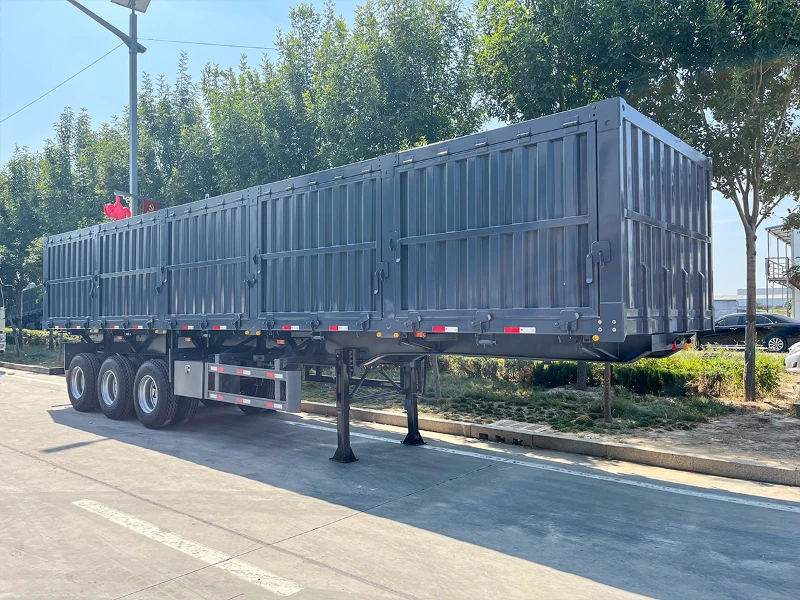
Rear tip versus side tip: the space behind the vehicle
The first difference between the two layouts is the space each one asks for. A rear tipper raises the body high at the front and drops the load out the back; the trailer needs a clear stretch of ground behind it, and enough headroom that the raised body does not hit overhead lines, bridges or site structures. On a tight site, that open rear space is exactly what is missing.
A side tipper keeps the vehicle roughly level along its own length and leans the body to one side. Cargo discharges out to the side, meaning the driver can pull up near a wall, hopper or stockpile and unload - no need to reverse into an open area. The trade-off is that the side needs the clearance instead of the rear, and the choice of which side to tip on should match the layout of the usual delivery sites.
How the Tipper Body Lifts in Operation
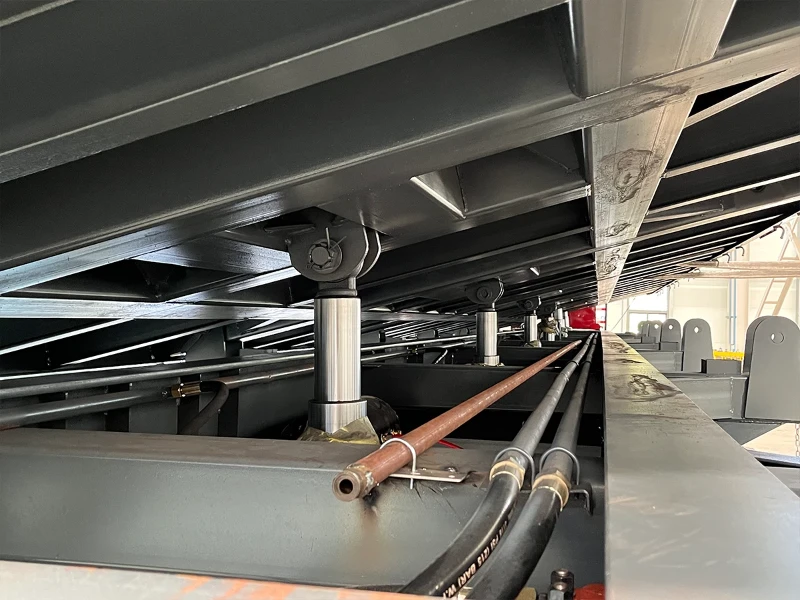
The side tipper's working parts are straightforward but load-bearing. One side of the body carries the hinge line; the opposite side carries the hydraulic lifting cylinders that raise the bed until the angle lets the material run out. A side gate or drop-down panel opens along the discharge side, held by hinges and locks that release once the body starts to rise. The rams, hinge pins and locking lugs all bear the full angled weight of the cargo. For this reason, their load rating is sized to match the bed's actual capacity, not just a generic brochure figure.
After the load clears, the body lowers back onto the subframe, the gate closes and locks, and the trailer is ready for the next run. The hydraulic pump and its controls sit on the trailer or run from the tractor's power take-off, and the operator watches the bed angle and the ground level through the whole cycle.
Stability on the lift
Side tipping puts the centre of gravity off to one side, which is why the ground matters more than it does on a rear tipper.Soft ground, sloped tracks or crowned road surfaces can cause the raised tipper body to tilt beyond its safe limit. This is exactly the scenario that can turn a routine unloading into a rollover. The trailer should be set on firm, level ground before the cylinders extend, the wheels chocked if the site slopes, and the load spread evenly across the bed before lifting.
The axle layout and track width also feed into this: a three-axle setup with a wide track gives a steadier base than a narrow two-axle unit on the same load, and the suspension should hold the body stable rather than letting it roll as the cylinders push.
Loads It Handles Best
The side tipper suits free-flowing bulk materials that slide and pile: crushed stone, gravel and sand, quarry aggregate, ore and slag, coal, and mixed construction waste. It works where the material can be tipped in a loose pile beside the vehicle and later loaded or graded by a loader. The trailer bed's sidewalls and floor are engineered to withstand abrasion from rock and repeated impacts from loader buckets. For this reason, wear-resistant steel plate is typically used on the floor and high-wear corner sections.
Where the layout earns its keep
The setup is at its best on repeat bulk routes: quarry to concrete plant, mine to stockpile, demolition site to recycling yard, and road construction along a shoulder where the material has to be dropped beside the pavement. On these jobs the discharge point is predictable, the site layout repeats, and dumping to one side lines up with how the stockpile or hopper is arranged.
What to check before you order
A few choices shape whether the trailer fits the work. The rated payload must align with your typical cargo. Our product line includes side tippers from 30 to 50 tonnes suited for African haulage routes, alongside a 3‑axle model rated at 60 tonnes.. The material's abrasiveness decides the floor and wall thickness. The discharge side should match the common site layout. The number and rating of the axles follow the bridge and road rules in the destination market. And the hydraulic cylinders, pump and gate locks are sized to the full load at the tipping angle, not to an empty bed.
When a Side Tipper Is Not the Right Choice
It is not the answer for every bulk load. Fine, dusty powders tend to blow off the side during discharge and do not suit an open side gate; those are better handled by a sealed powder unit. Loads that have to be placed precisely in a small hopper, or that arrive at scattered drop-off points with no level discharge area, also work better with a simpler bulk trailer-the kind behind our earlier fence trailer delivery to Nigeria, built for flexible general cargo rather than a repeated tipping cycle. If your regular unloading locations lack solid, level ground alongside the trailer, a side tipper will struggle with site conditions rather than making your work easier.
If your bulk jobs keep ending at tight or walled-in sites, send us the material you carry, the regular load weight, the width and ground condition of the usual discharge area, and the road weight limits in your market. We will tailor the tonnage, axle configuration, floor plate thickness and tipping direction to your operation. Then we'll share a drawing and quotation for a trailer suited to your site conditions - not just the largest model we have in stock.


