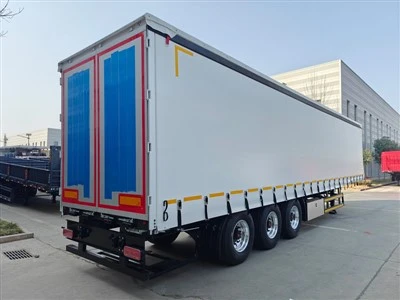
Matching The Tank To The Liquid: What A Stainless Steel Tanker Trailer Is For
Leave a message
When buyers quote for a tanker trailer, they typically start with capacity - 30,000, 40,000 or 50,000 litres. Yet for many liquid cargoes, the tank's construction material matters more than its total volume. A tank that reacts with the cargo, leaves a metallic taste, traps residue between batches, or corrodes through after a season will lose the load regardless of how large it is. Choosing the right tank material starts with what the liquid actually is, and how it behaves in contact with steel.
A stainless steel tanker trailer is the tank chosen when the cargo cannot tolerate rust, contamination or cross-batch residue. Its body is formed from stainless plate, the interior is polished to a smooth finish, and the welds are ground and finished so the surface holds no dirt or product. It is the standard option for edible oils, dairy goods, beverages, syrups and mild chemical liquids. These cargoes must arrive uncontaminated, unaltered and ready for subsequent processing.

What a plain steel tank runs into
A carbon steel tank is strong and inexpensive, and it carries fuel and crude oil well, but it reacts with certain liquids. Moisture and acidic or salty cargoes can start internal corrosion, which shows up as rust scale, discoloured product and pitting along the lower shell and around the welds. Certain liquids may develop a metallic flavour or turn darker when stored inside an unlined steel tank. Besides, leftover residue from one batch can stick to the rough inner surface and contaminate the following load.
These problems do not appear on day one. They build up over repeated loads, which is why a tank that looked fine when delivered can start losing food-grade or chemical customers a year later.
What Stainless Steel Delivers
Stainless steel addresses those points directly. The alloy resists the corrosion that moisture and mild chemicals cause in plain steel, so the inner shell stays clean and does not shed rust into the cargo. The polished interior lets liquid drain completely, leaving little residue between batches, and the smooth surface is easier to wash through when the product changes. Because it does not react the way plain steel does, the cargo keeps its colour, taste and consistency from the plant to the delivery point.
The downside comes in cost and weight: stainless steel plate plus weld finishing drives up the tank price compared to bare steel models, and stainless is also heavier than aluminium. Still, this upgrade pays off when your cargo carries high value or requires strict cleanliness standards.
The liquids it suits
The stainless tank is most often specified for food-grade and light industrial liquids. Edible oils such as palm, soya and rapeseed oil, animal and vegetable fats, milk and dairy products, juices and beverages, syrups, honey and similar sweeteners all fall into this group. The same applies to mild chemical solutions, non-corrosive solvents, and liquid goods that are not susceptible to contamination from the tank interior.
For these cargoes the standard is not just that the liquid flows out, but that it arrives in the same condition it left the refinery, mill or dairy. That is the requirement a stainless interior is built to meet.
How the tank is put together
Beyond the plate itself, the details decide whether the tank holds up to food-grade use. The shell and heads are welded along longitudinal and circumferential seams, and those welds are ground and polished to match the interior rather than left rough. Manholes give access for inspection and cleaning; venting and breather valves keep pressure balanced as the liquid warms or cools; discharge outlets, pumps and piping are sealed so no residue sits in a dead leg. For cargoes that thicken or solidify in cold conditions, heating coils and insulation can be installed. Divided compartments also allow a single trailer to haul multiple products with no cross-contamination.

When Stainless Steel Is Not the Best Choice
Stainless steel is not a universal answer. Strong acids, strong alkalis and aggressive solvents may attack even stainless plate and call for a special alloy or a lined tank instead. High-temperature molten products such as bitumen are carried in purpose-built heated units, not a standard stainless food-grade tank. And for ordinary fuel or water where corrosion and taste are not the issue, a stainless shell buys capacity and cleanliness the cargo does not need, at a higher price and weight.
Steel, aluminium or stainless: how the choice splits
The three common tank materials each cover a different job. Carbon steel remains the practical option for fuel, crude oil and non-corrosive bulk liquids, where strength and cost efficiency are top priorities.Aluminium wins on weight: a lighter tank leaves more payload and lowers fuel use, which suits long fuel hauls, though its food-grade and corrosion limits are narrower. Stainless steel sits at the cleanliness and corrosion end of the range, chosen when the cargo's quality standard is the deciding factor rather than the lowest purchase price.
Inter-Load Cleaning Requirements
For food-grade work, the tank is part of the product handover. After one edible oil or dairy load, the interior has to be washed and inspected before a different product goes in, so residue and odour do not carry over. Access hatches, smooth weld seams and self-draining piping all help speed up tank washing and deliver a more complete clean. This is a different discipline from a sealed bulk powder unit-the kind behind our earlier powder tanker trailer delivery to Dominica, which moves dry cement and fly ash in a closed pneumatic system rather than a washed liquid tank.
What to confirm before ordering
A few details should be settled early. The cargo's exact name, concentration and temperature decide the plate grade and whether heating or insulation is needed. The number of compartments follows how many products run on the same route. Whether the requirement is food-grade, industrial chemical or general cleanliness, this standard dictates the tank's interior finish and weld preparation.And the payload and bridge rules of the destination market decide the axle layout and total tank volume.
Send us the liquid you plan to carry, its concentration and usual temperature, the single-batch volume, and any food-grade or chemical standard it has to meet. We select the right steel grade, internal finish, compartment arrangement, plus heating or insulation systems to suit your cargo. We then provide a tank specification and quotation tailored to your liquid's requirements, instead of offering a generic tank meant for all types of products.