Lowbed Vs. Flatbed Vs. Skeleton: Picking The Right Haulage Rig For African Terrain
Leave a message
You've landed a new contract for a remote off-road site, and your fleet manager needs to pick the right trailer. The best choice is not necessarily the priciest model or the one with the highest axle count. It comes down to matching the trailer deck to both your cargo and road conditions.In African haulage, sending the wrong trailer to a rugged terrain job doesn't just waste fuel - it risks getting your load stuck or damaging expensive machinery.
We see buyers default to the same trailer type for every job. But a lowbed semi trailer handles excavators differently than a standard flatbed handles steel beams. If you are outfitting a fleet for construction or resource extraction, here is how to decide without guessing.

Lowbed Trailers: Where Ground Clearance Makes All the Difference
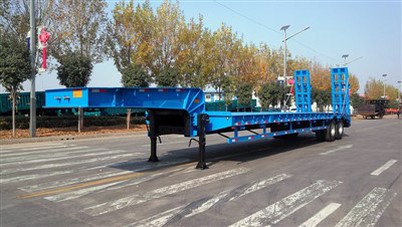
Think of the lowbed as your heavy lifter for oversized, un-wheeled, or top-heavy loads. The defining feature is the dropped deck, usually sitting between 800mm and 1000mm from the ground. This isn't just for show - it buys you critical vertical clearance under bridges and power lines that a standard trailer can't clear.
For contractors moving earthmoving gear, this deck height is non-negotiable. An excavator's boom needs that extra space to stay legal and safe. We have seen operators attempt to haul compact dozers on flatbed trailers, soon finding the high centre of gravity is unsafe on narrow, rough quarry access roads. A lowbed's low centre of gravity keeps the load stable over uneven terrain.
If your route involves frequent transitions between paved highways and ungraded access roads, the suspension setup matters as much as the deck. A well-spec'd lowbed semi trailer will have reinforced goosenecks and heavier-duty suspension to absorb the shock loads that snap kingpins on lesser rigs. For a real-world example of this spec in action, check out our recent delivery of 22 lowbed semi trailers shipped to Kazakhstan for -40°C mining equipment haulage, where operators faced similar extreme terrain challenges.
The Flatbed: The Versatile Workhorse
The flatbed is your generalist. If your regular haul covers steel pipes, timber, palletised cement and occasional generators, this is your go-to option. Its fixed deck height, typically 1300–1500 mm, enables side loading via forklift or crane, cutting down loading time significantly at busy yards.
Where the flatbed loses to the lowbed is in vertical limits. You can't stack high on a flatbed without hitting overhead obstructions, and you certainly can't haul a 3-meter tall transformer on it safely. But for standard construction materials, the flatbed's open sides make lashing down easier and faster. Drivers can walk around the load, throw chains over the top, and get back on the road in half the time it takes to secure an oversized piece on a lowbed.
For fleets running mixed cargo, a flatbed semi trailer is often the first purchase. It's the rig that keeps the cash flow moving while you wait for specialized haulage contracts. If you also haul bulk cargo such as cement or grain, consider a bulk cement trailer as a good complementary solution.
The Skeleton: Port-to-Site Efficiency
The skeleton trailer is a specialist. No deck, just a spine and twist locks. If your primary business is moving 20ft, 40ft, or high-cube containers from the port to an inland yard or construction camp, don't overcomplicate it. A skeleton trailer saves weight, which means more payload per trip.

In African port logistics, turnaround time is money. Skeletons are designed for quick lock-and-go operations. We recently built 28 custom 40ft skeleton semi trailers for a Kenya port logistics operator who needed to clear containers faster during peak season. The reduced tare weight meant they could legally carry more cargo per trip without upgrading their prime movers.
Skip the skeleton trailer for breakbulk cargo. With no solid deck, it cannot support irregular loads, and twist locks are not built to handle concentrated point loads from steel beams or machine tracks. This trailer is made solely for containers.
The Decision Matrix
Before you sign a purchase order, run your cargo through this quick check:
- Cargo Height: Over 3 meters? You need a lowbed semi trailer. Period.
- Load Type: Wheeled machinery or un-wheeled heavy iron? Lowbed. Pallets, pipes, or bags? Flatbed. ISO containers? Skeleton.
- Route Profile: Steep inclines, rough tracks and low bridges call for lowbed trailers. Flatbeds fit paved highway and depot transfers, while skeleton trailers are built for port shuttle operations.
- Loading Method: Side-loading with a forklift? Flatbed wins. Drive-on or crane-lift from above? Lowbed handles both.
Getting the spec right the first time avoids costly retrofits and downtime. If you're unsure which configuration fits your next contract, send us your typical load dimensions and route profile. We'll tell you straight whether you need a lowbed, a flatbed, or a skeleton - and why.
Spec Sheet Quick Reference
|
Specification |
Lowbed Semi Trailer |
Flatbed Semi Trailer |
Skeleton Semi Trailer |
|
Payload Capacity |
30–150 tons |
40–60 tons |
50–70 tons |
|
Deck Height |
980–1100mm |
1200–1300mm |
1300–1400mm |
|
Best Cargo Type |
Excavators, crushers, heavy machinery |
Steel pipes, construction materials, palletized goods |
Containers, palletized goods, highway logistics |
|
Ideal Road Condition |
Unpaved, gravel, rough terrain |
Paved or well-maintained gravel |
Paved highways |
|
African Road Suitability |
Excellent |
Moderate |
Poor to moderate |
Selecting the Right Trailer for Your Operation
Choosing the right trailer isn't about picking the cheapest option - it's about matching the machine to your actual cargo, your roads, and your delivery timeline. A lowbed semi trailer from Vehicle Master is built for exactly this kind of demanding work, with configurations that can be customised for your specific payload and terrain.
If you're planning an order and want to talk specs, pricing, or delivery timelines, reach out through our contact page or WhatsApp us directly. We help you configure a trailer tailored to your operation, rather than simply offering the lowest-cost unit available. If you want to know how our trailers hold up under real-world African operating conditions, check out our fence semi trailer buyer's guide to learn what African haulers truly require from their equipment.