When The Crane Is Days Away: The Trailer That Loads The Container Itself
Leave a message
Imagine a small coastal port, railway siding or out-of-town depot. Containers are on-site, yet no reach stacker is available - sometimes there isn't even one on location.The box sits on the ground while the truck waits, the booking slips pile up, and a "simple delivery" turns into two or three days of hanging around. In many growing markets, that wait is the real cost of moving containers, not the fuel.
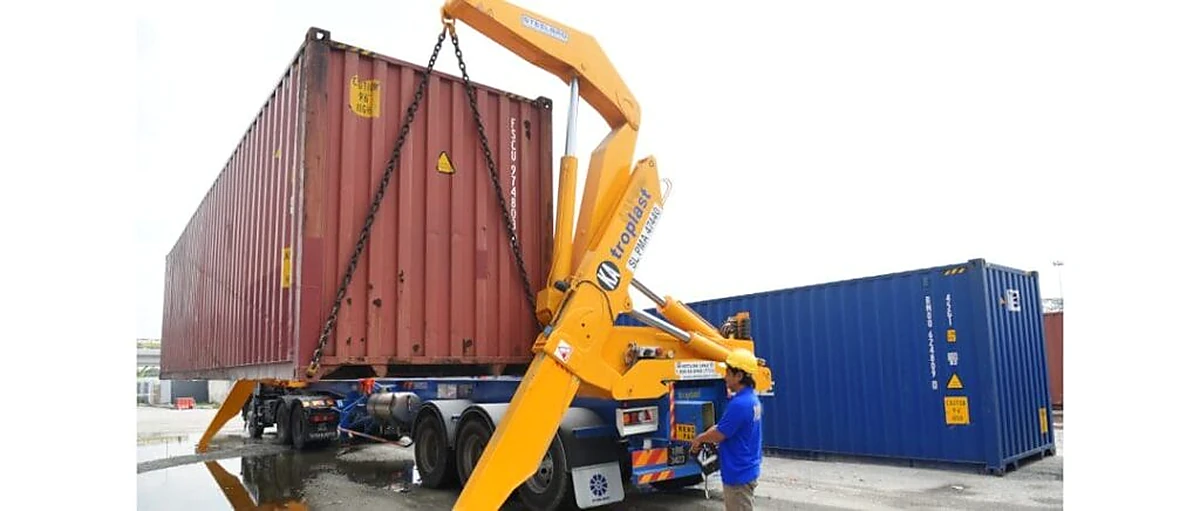
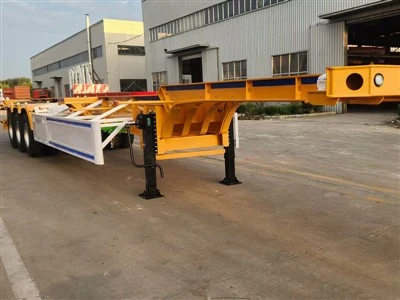
The usual fix makes the problem worse: send a truck to the depot, wait for the crane to free up, load, drive, and then wait again at the other end. A container self-loading trailer takes a different route. No yard crane is required. It comes fitted with its own hydraulic lifting arms: it drives up to the container resting on the ground, hoists it onto the deck, secures it, and departs. At the delivery point, it repeats the process in reverse - no external crane needed at any stage.

How a box goes from the ground to the deck in minutes
The whole cycle is shorter than most people expect. The trailer parks beside the container, drops its support legs, and extends two hydraulic lifting arms that hook into the box's corner castings. The lifting arms raise the container fully off the ground, swing it over the trailer deck, and set it down onto the twist locks. The driver then retracts the arms and support legs, and the trailer is ready to roll.At the receiver, the same steps run backwards-the trailer lines up, lifts the box off, and sets it down on the ground. From arrival to pulling away, a trained crew turns the whole thing around in three to five minutes, remote control in hand, with no second machine involved.
Where It Proves Its Value
This is not a trailer for a big, well-equipped port where reach stackers run around the clock. It pays off where the lifting gear is missing or overbooked: small coastal ports, inland dry ports, rail sidings, remote mine and construction sites, and the yards of traders who take deliveries straight off the vessel but have no crane to call their own. The truck turns a door-to-door delivery into a true one-truck move-no depot transhipment, no standing in line behind other boxes.
What to spec before you order
The devil is in the lifting numbers. Let us know which container sizes you regularly work with: 20ft, 40ft or 45ft. The lifting capacity and arm reach are engineered for these specifications, with a standard rating for loaded containers of 30–40 tonnes. Check the lifting height and swing range, whether the controls are remote or fixed, and the safety cut-outs that stop an unstable lift. The support legs and hydraulic system take the load at every pick-up and drop, so they are the parts worth asking about, not the parts to skimp on.
The arithmetic behind the wait
Count the hours a conventional truck loses waiting in a depot queue, running empty to and from the crane bay, and doing the same at the receiver. A self-loader removes both waits-arrive, lift, go. On routes with many daily cycles, the time saved from waiting in queues adds up to an extra run. This trailer can pay for itself well before its first scheduled service. It looks like a trailer with arms bolted on, but it actually sells itself on the time it does not spend waiting.
If your containers are moving through small ports or inland yards without reliable lifting gear, send us the box sizes you carry, the route and what the drop-off point looks like. We will size the lifting arms and capacity to your real boxes and, for heavier or over-dimensional loads, talk through the wider special semi trailer range. Share your operational details, and we will provide you with a custom layout, lifting capacity specification and quotation - not a standard one-size-fits-all price.